San Diego "Pure
Water" Facility Tour
Seeing the
Next Generation Water Treatment Installation
Trip Report
20180408
Back to Bill Caid's Home Page
The Experience
For anyone who has been
in a coma for the last 140 years, the big news is that SoCal, and
San Diego in particular has a water problem. Nearly all the
water that is consumed in SD, or SoCal for that matter, is
imported via an extensive (and vulnerable) system of aqueducts and
canals. A significant portion of SD's water comes from the
Colorado River that is on the Arizona-California border, the other
portion comes from the Sierra Nevada mountains of central/northern
California. This water travels over 200 miles to get to San
Diego's local water system and in the process traverses barren
deserts, tall mountains and a number of active earthquake fault
zones. In general, the majority of the initial
infrastructure was started in the late 1800's to early 1900s, so
some components of the system are archaic (like unlined dirt
ditches). Other portions, the All-American Canal retrofit
for instance, have been recently upgraded or are currently under
construction (like the San Vicente Aqueduct enhancements).
While these facts are distressing, the real issue is that we have
more population than the current water supply can support.
The SD City Counsel and SD County Supervisors have not yet
turned down building permits based on water availability. SD
is a nice place with great weather and everyone wants to live here
so not surprisingly there is a housing shortage. Housing
shortages can be addressed by building more dwellings. A
water availability shortage is not so simple. It is nearly
impossible to create water from thin air (morning dew
notwithstanding) so more creative methods must be devised.
SD is a beach city and given so, it has access to an unlimited
supply of salt water from the Pacific Ocean. As most people
are aware, ocean water is not drinkable (potable) due to the salt
content and other "contaminants" (like untreated sewage from
Tijuana and further south). Ocean water can be transformed
to potable water via a process known as "desalination" but the
problem is that this method is very energy intensive. If
cost is no object and you have your own personal nuclear reactor
to provide a large volume of cheap energy, you can accomplish this
goal. Many such installations (less the reactor) exist in
Saudi Arabia to provide water to the local population. But,
here in the United States and the bulk of the remaining world,
cost is a major factor; both initial capital cost for system and
infrastructure and the recurring operating costs.
Given that the supply system is over-taxed and the availability of
water is decreasing due to climate change and persistent over-use,
another solution must be devised. The only other obvious solution
to creation of water is to recycle what water you do have back
into potable form. San Diego's Pure Water Facility intends
to address this very problem with a "sewage to tap" closed-loop
system. Sadly, this concept has been around for at least 50
years, but was (if you can excuse the pun) poo-poo'ed due to the
uncomfortable feelings evoked by the concept of drinking
wastes. Emotional responses notwithstanding, the bulk of the
water consumed in homes goes right down the drain -- toilets,
showers, bath water, clothing wash water, dishwasher, etc.
So, it stands to reason that if a reliable and cost-effective
process could be devised, then substantial amounts of water could
be created by "merely" treating wastewater. A simple
concept, emotions ignored, but more complex in reality.
The SD Pure Water Facility was conceived many years ago and began
operation in June 2011. Now, as the system gets closer to
full operation status, the City has started an "outreach" program
to manage consumer expectations on their work product. That
is to say convincing the population that drinking recycled sewage
is a good thing. Part of this outreach program is a series
of on-site tours of the facility. We got a notice in the
mail and immediately signed up for the tour.
The facility photos below are from my Sony A7RM3 with Sony 16-35mm
GM f/2.8 zoom lens. Historical photos are from several other
cameras.
The photos below are
what we saw.
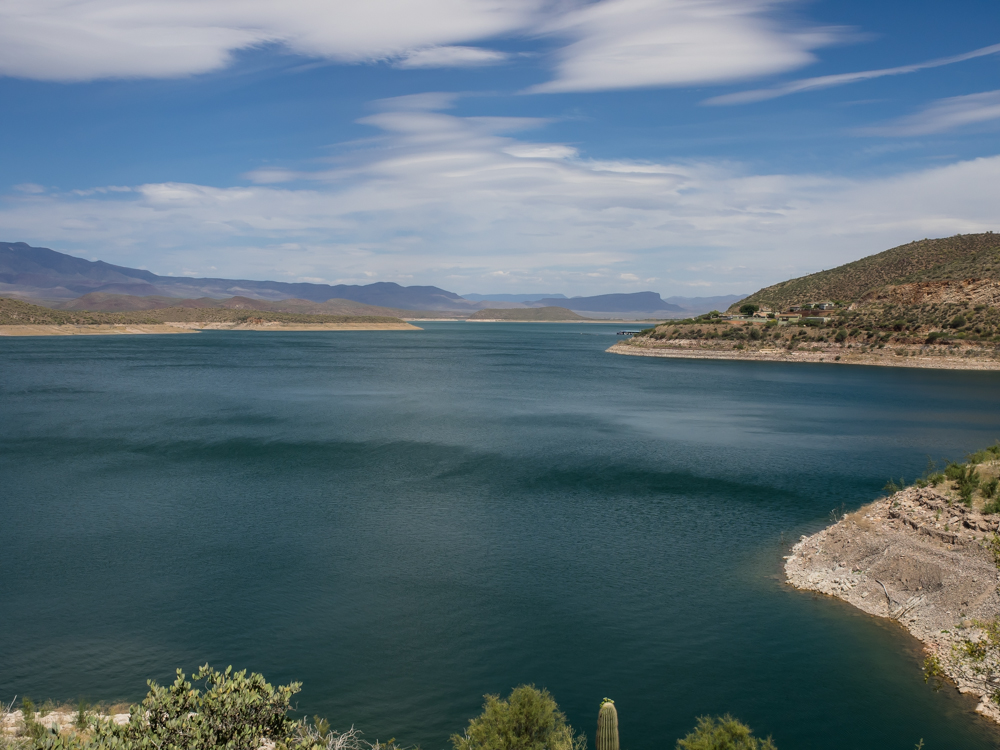
The photo above was taken in 2014 of Roosevelt Lake on the Salt
River in Arizona in the mountains east of Phoenix. Notice
the reservoir is much less than full capacity. This lake
is representative of conditions in the west, but this lake does
not drain into Lake Mead but rather joins the Colorado River
outside of Yuma, AZ.
To
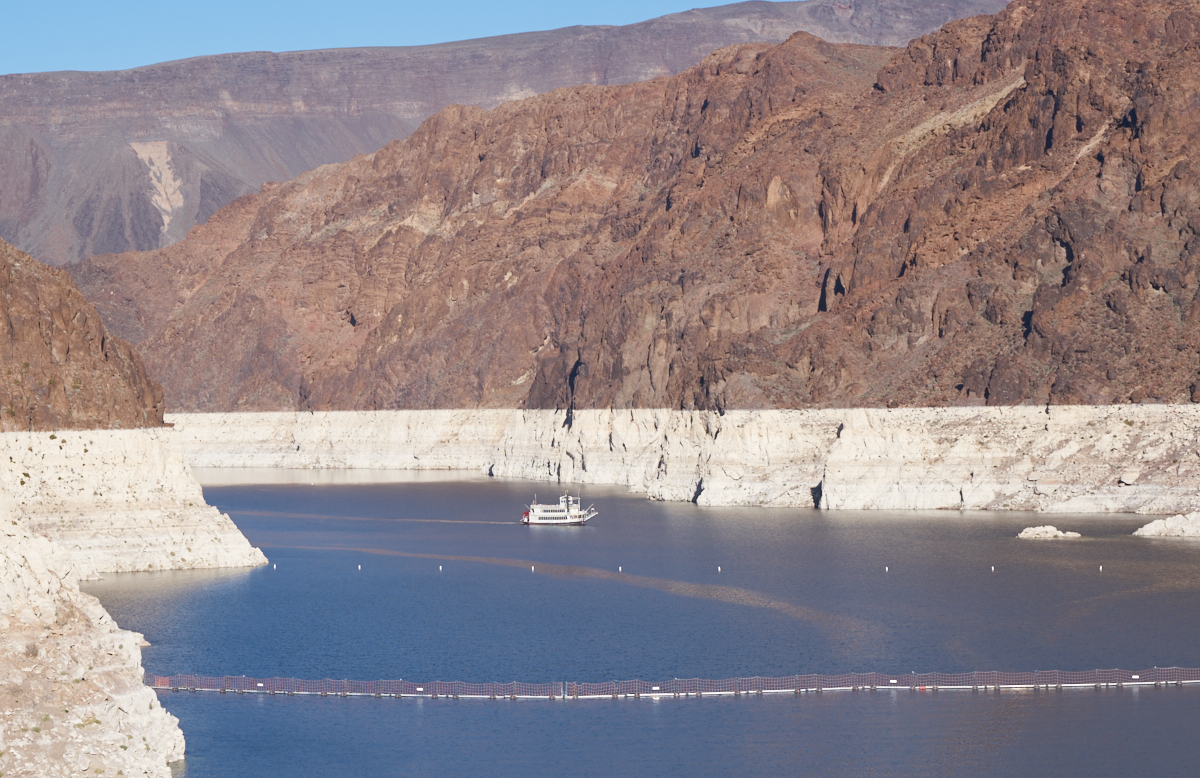
gain a bit of insight to the scope of the problem one only has
to look at the 2017 "bathtub ring" in Lake Mead to get a sense
of urgency for the situation. The tour boat provides a
sense of scale, but the ring is about 160 feet tall and
growing. A long series of dry winters combined with
increasing domestic water usage has resulted in the shortage.
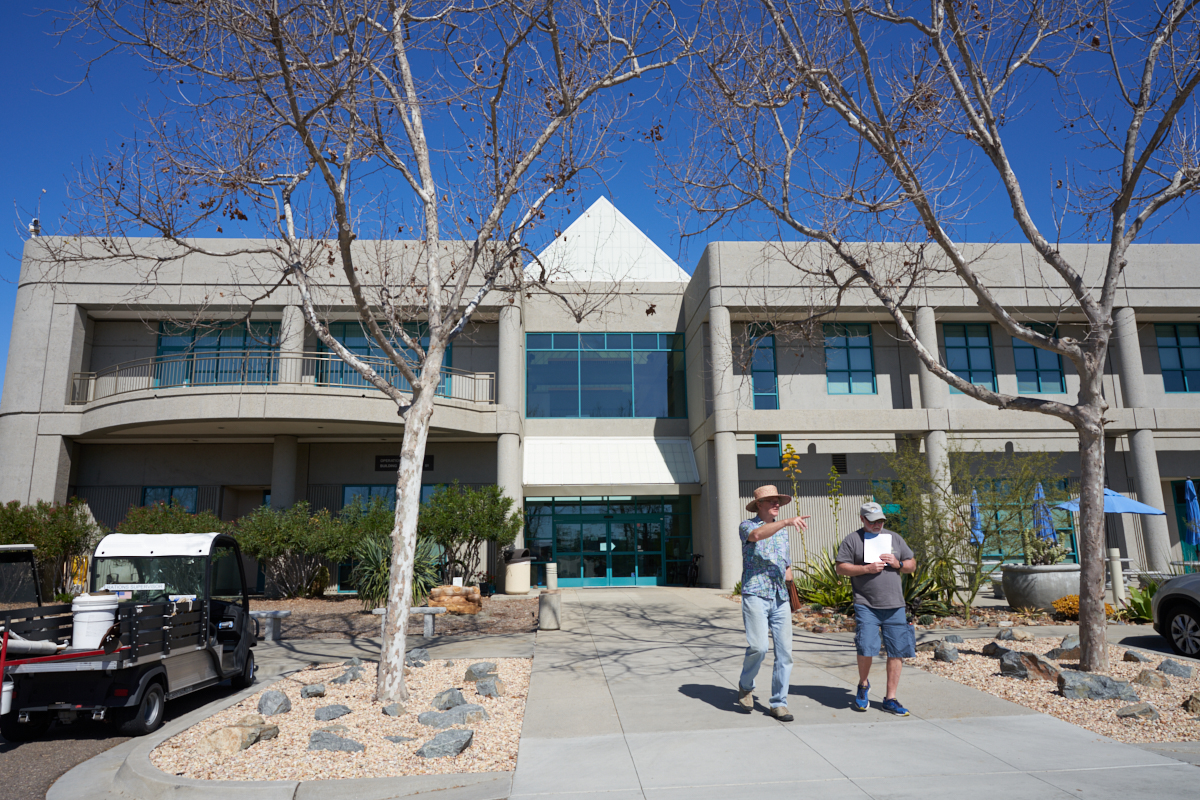
There were quite a number of folks interested in taking the
tour. Above is the administrative building for both
historical water treatment and the newer SDPWF initiative.
Fellow tourists were taken into the auditorium and shown a short
video on the history of the program and the current status.
The goal of the system is both simple and bold: 1/3 of the total
water supply for SD will come from the sewer to tap
program. There is no other way to meet the future water
needs without some radical changes in the supply
infrastructure. It was rather daunting that we saw
multiple signs for evacuations, but there are some harsh
substances used as part of the treatment process, like sodium
hypochlorite (bleach) for example. The SDPWF uses a
reasonably conventional 5-step process for water treatment.
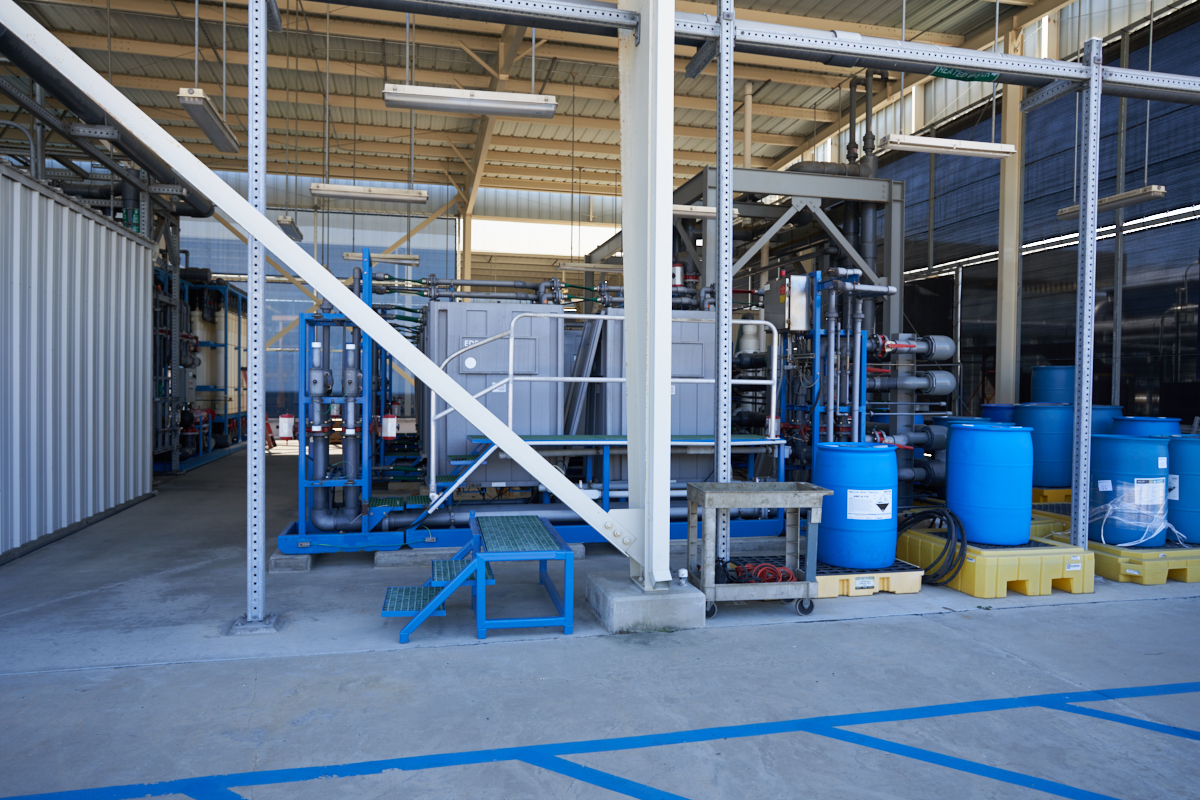
This facility is the real-deal in terms of industrial build-out.
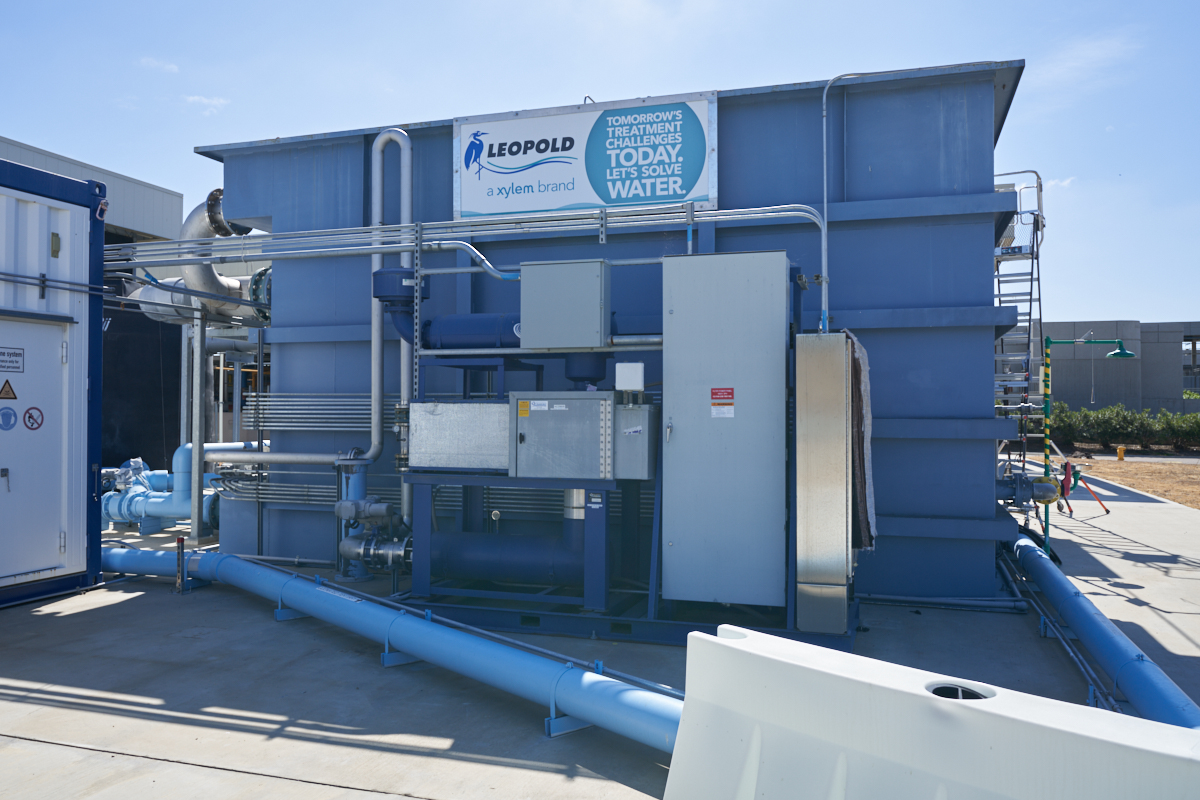
Ever mindful of marketing and branding, component equipment
vendors insure you understand their message. The first two
steps of the treatment process are shown in the photo
above. The first step is "ozonation" where ozone is
created via high voltage current and then introduced into the
effluent. Ozone is highly reactive and will destroy
microorganisms in the effluent. Ozone is produced in the
cargo container on the far left of the photo above (the white
door). The second step is exposing the ozonated effluent
to biologically activated carbon filtration (the blue
structure). The filtration exposes the effluent to aerobic
bacteria which consume about 50% of the organic matter in the
effluent.
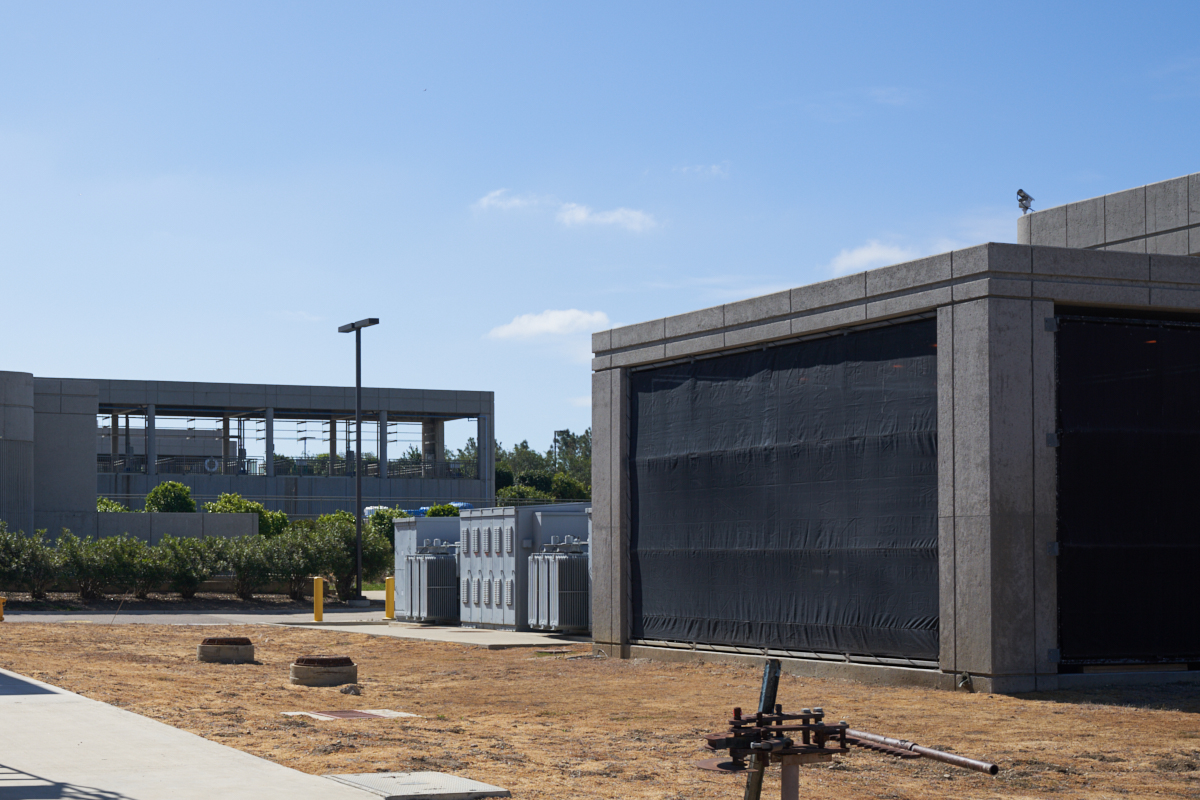
As I mentioned, this process is energy-intensive and would not
be possible without substantial amounts of electricity.
Note the transformers and switching equipment in the photo
above.
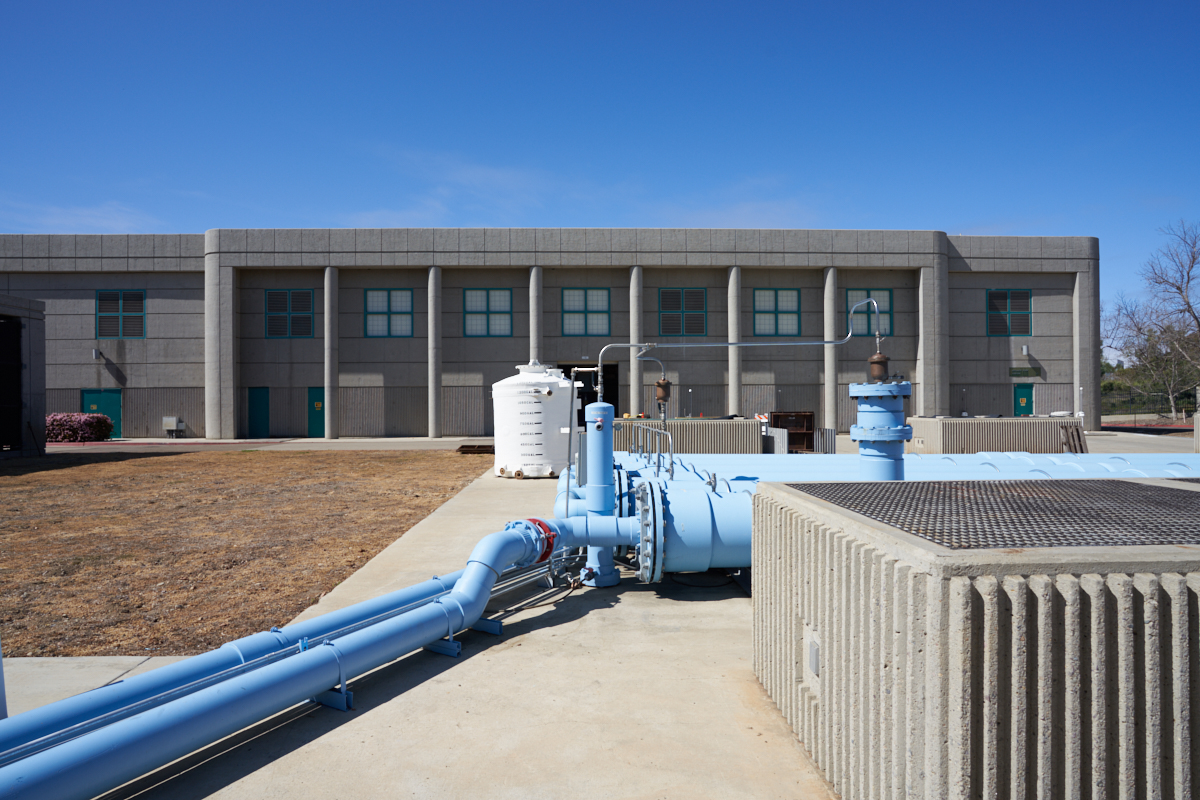
The open area holds the ozonation interaction plumbing.
The effluent plus ozone are pumped into the large blue pipes
where they mix and interact. From here, it is pumped to
the activated carbon filtering equipment.
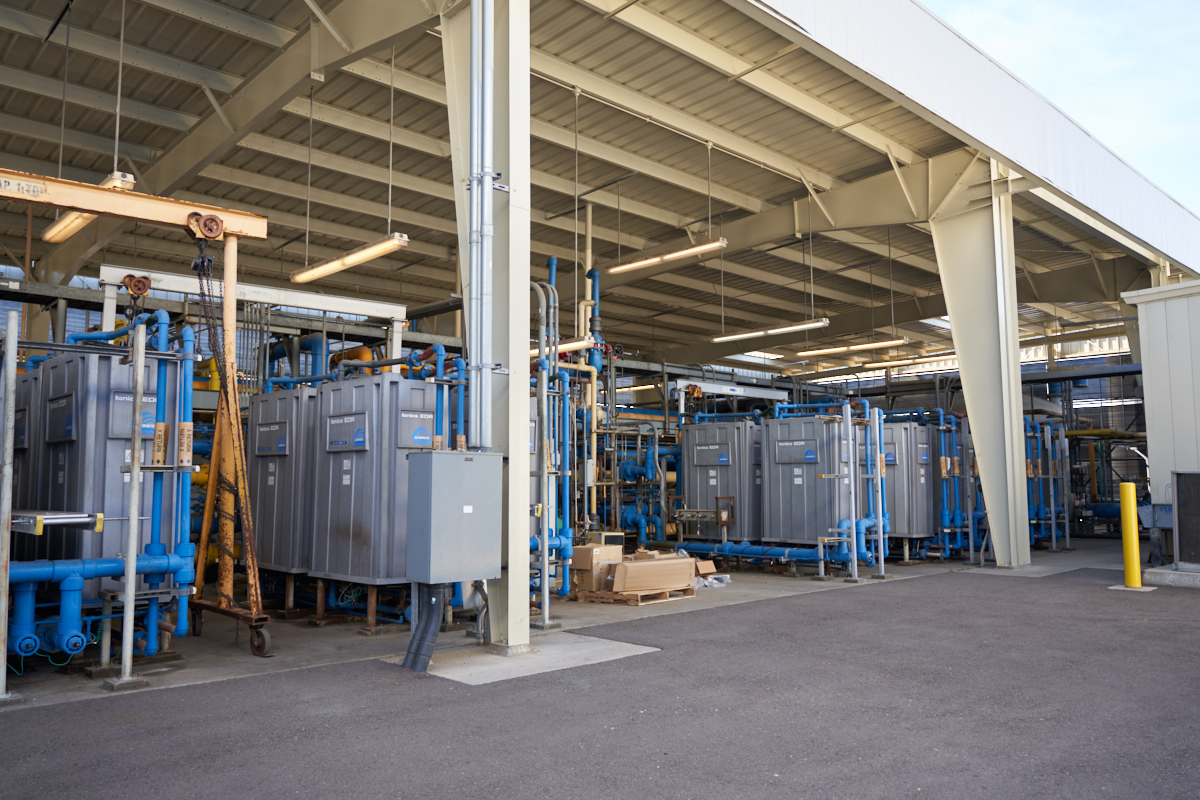
A lot of equipment supports the first two step of the
reclamation process.
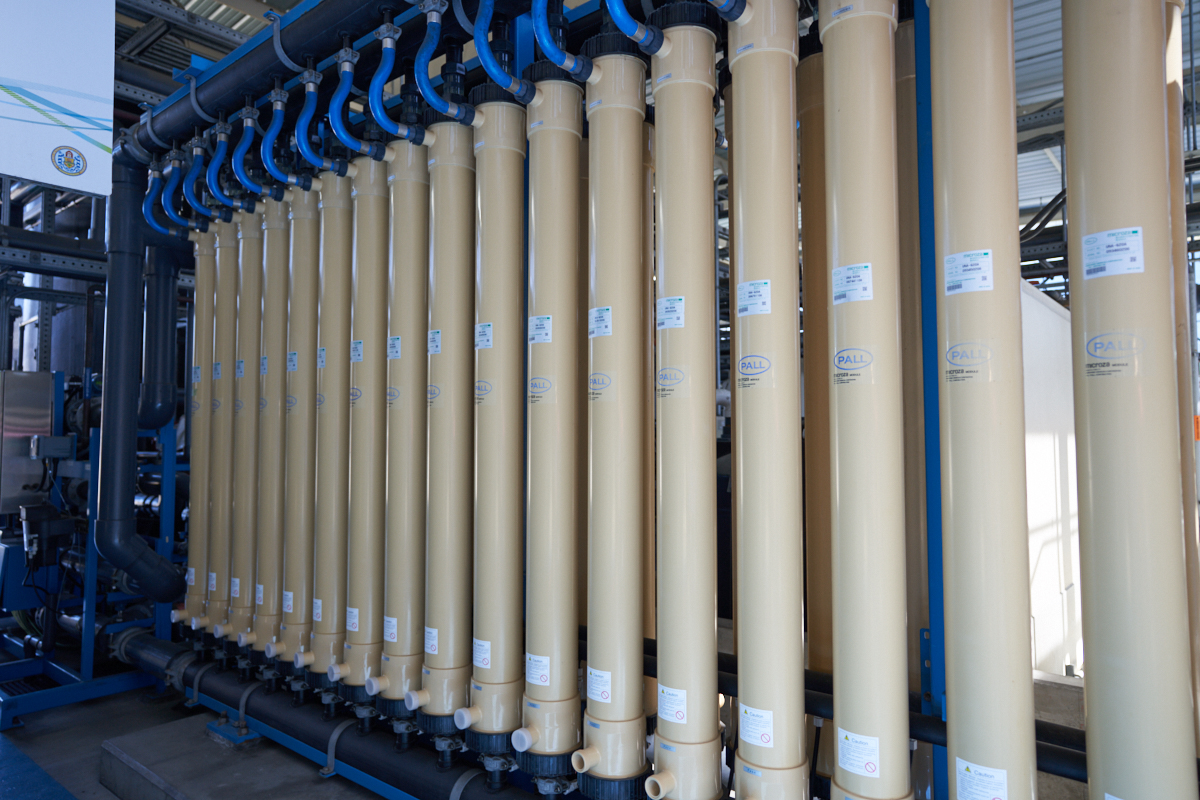
After the activated carbon step, the effluent goes to membrane
filtration to remove "stuff" in the water. This step
removes suspended solids, bacteria, protozoa and other
"stuff". This step is claimed to be 99.99% effective.
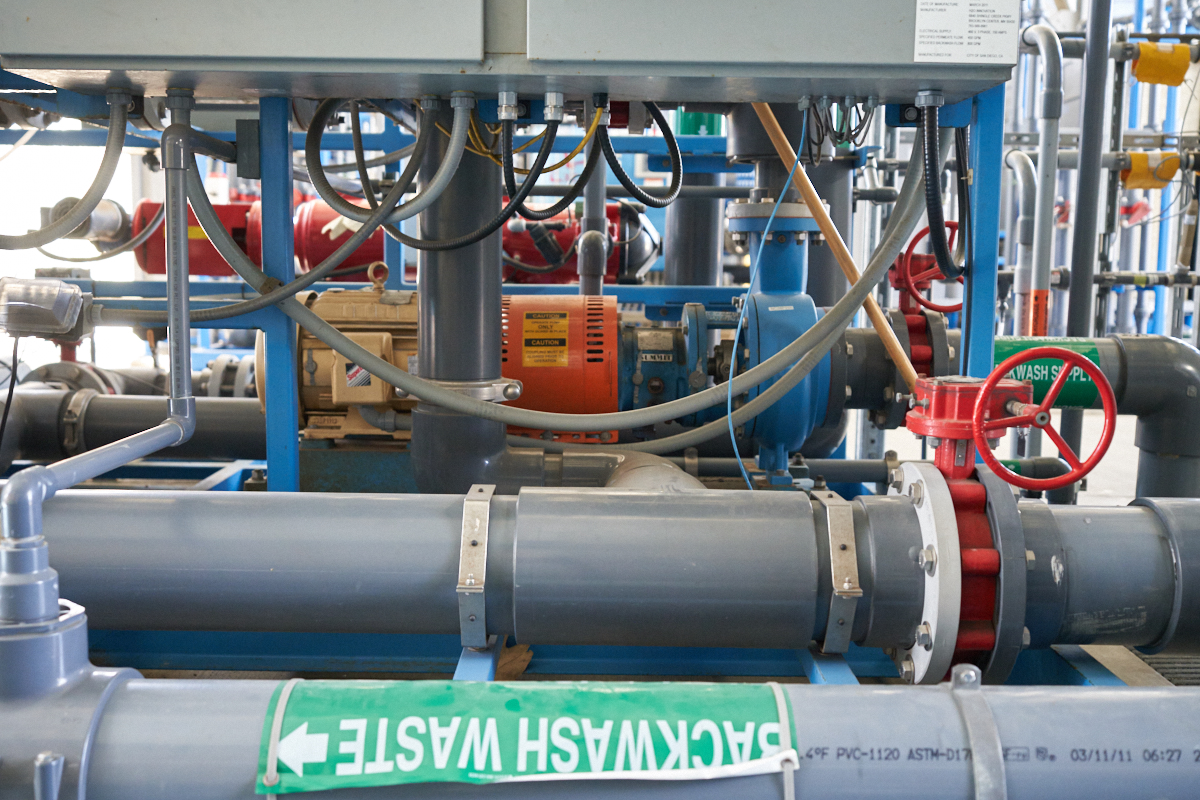
As stated, this process is energy-intensive and requires a lot
of powerful pumping and plumbing equipment, not to mention
instrumentation to control the process.
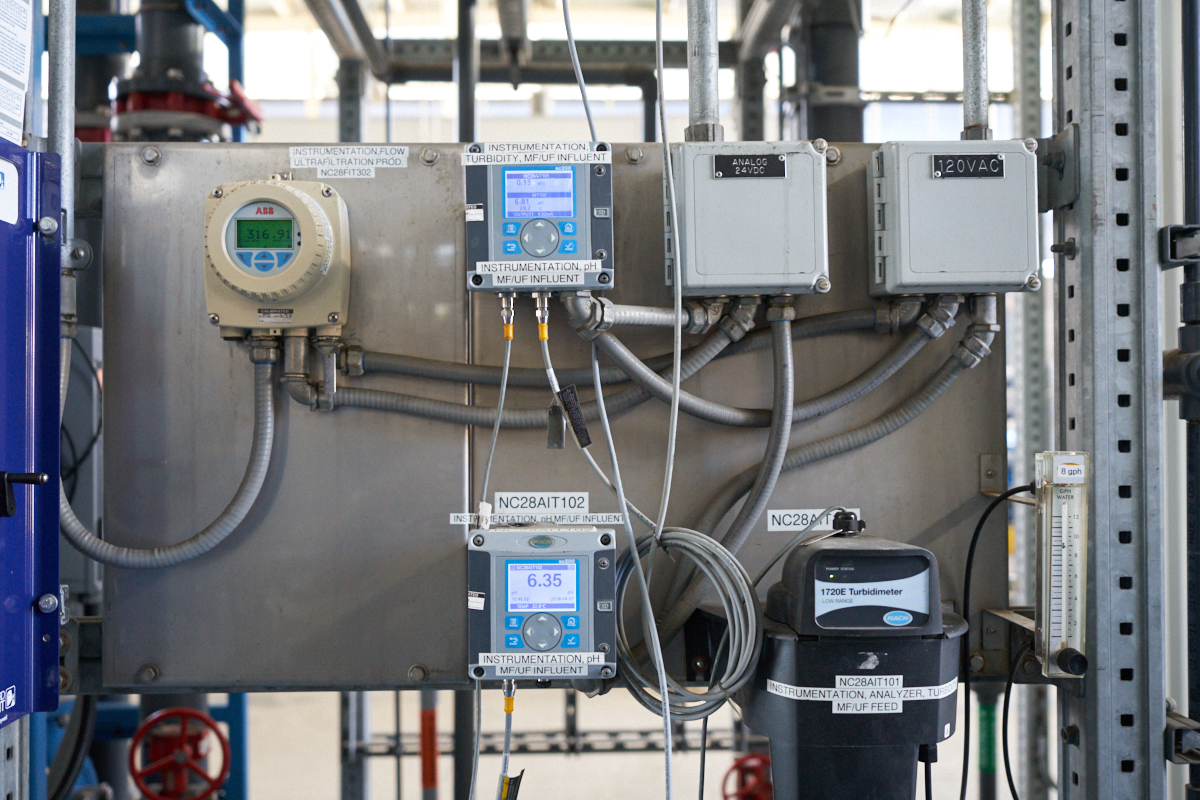
Any critical process requires instrumentation and monitoring to
insure correct operation of equipment and product quality.
Things like pH and turbidity of the effluent are monitored
continuously by automated sensors.
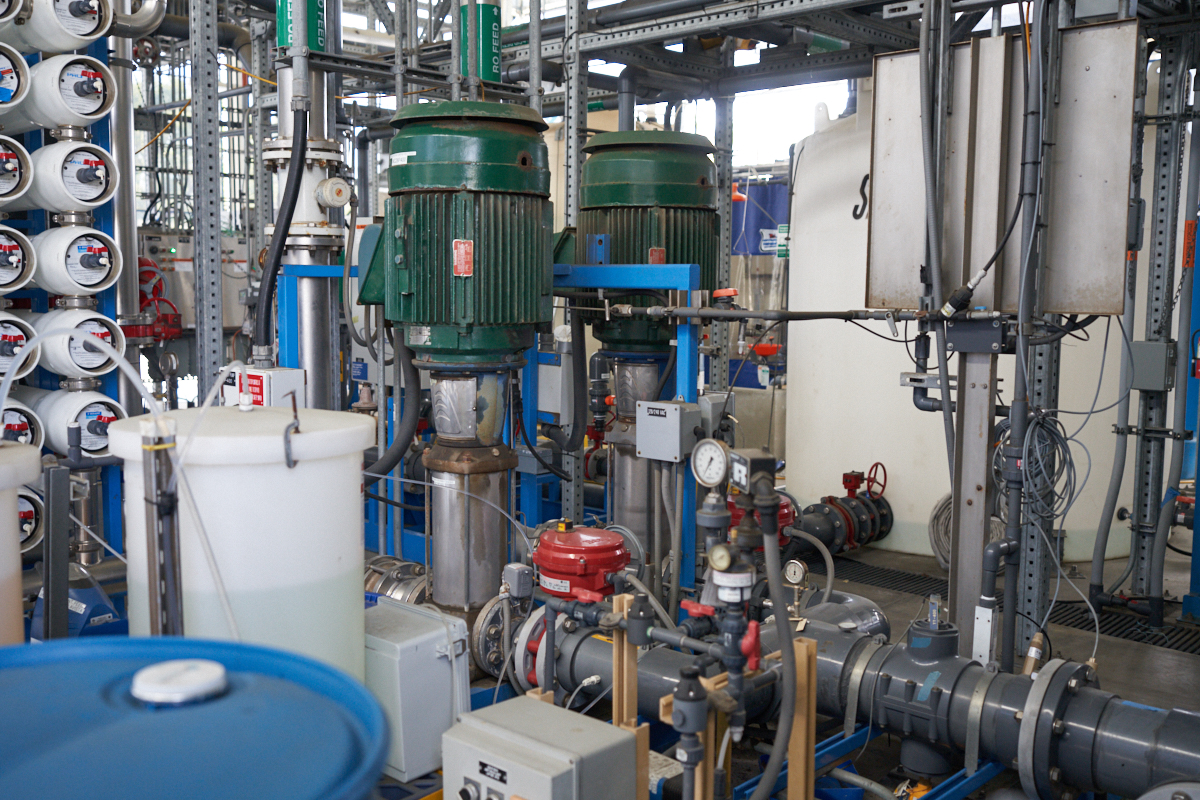
Lots of high-power (and generally inefficient) electric motors
are needed to run the pumping operations.
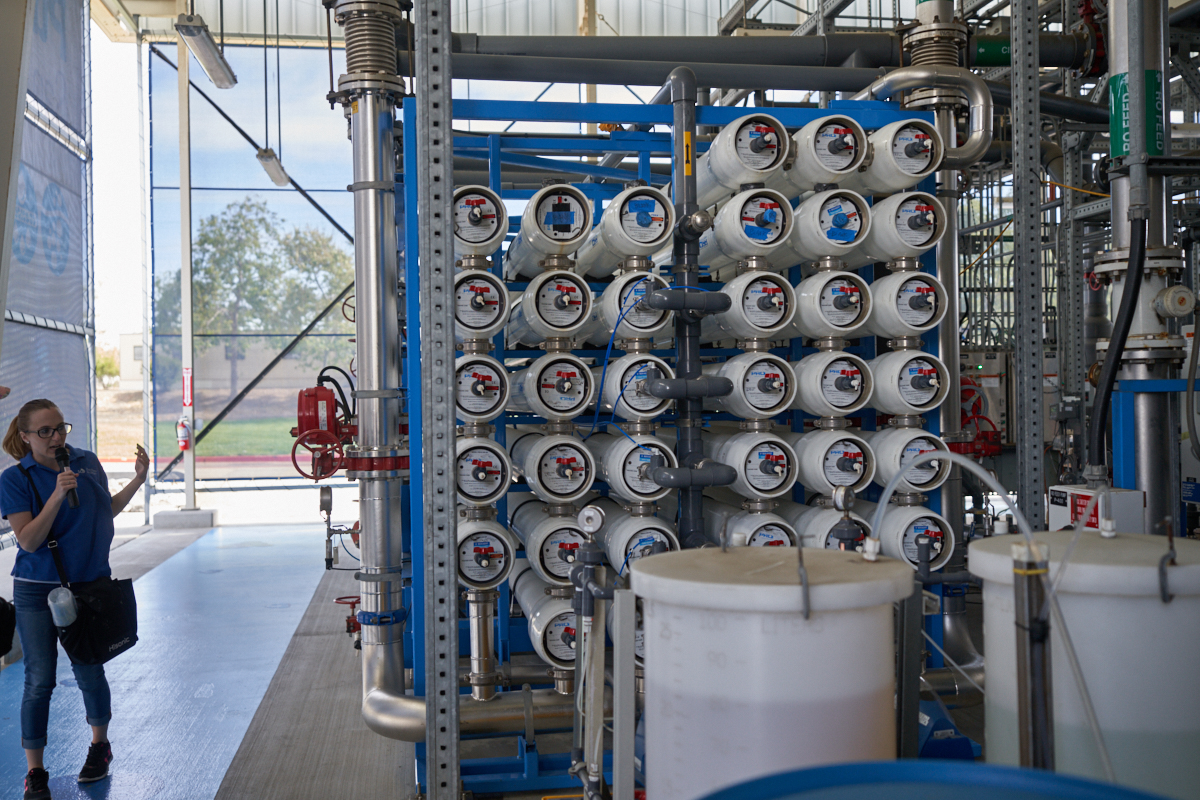
When the membrane filtration step is completed the effluent is
then pumped to a high-pressure (20 bar or 300 psi) reverse
osmosis (RO) system. Each of the white pipes above
contains an RO element.
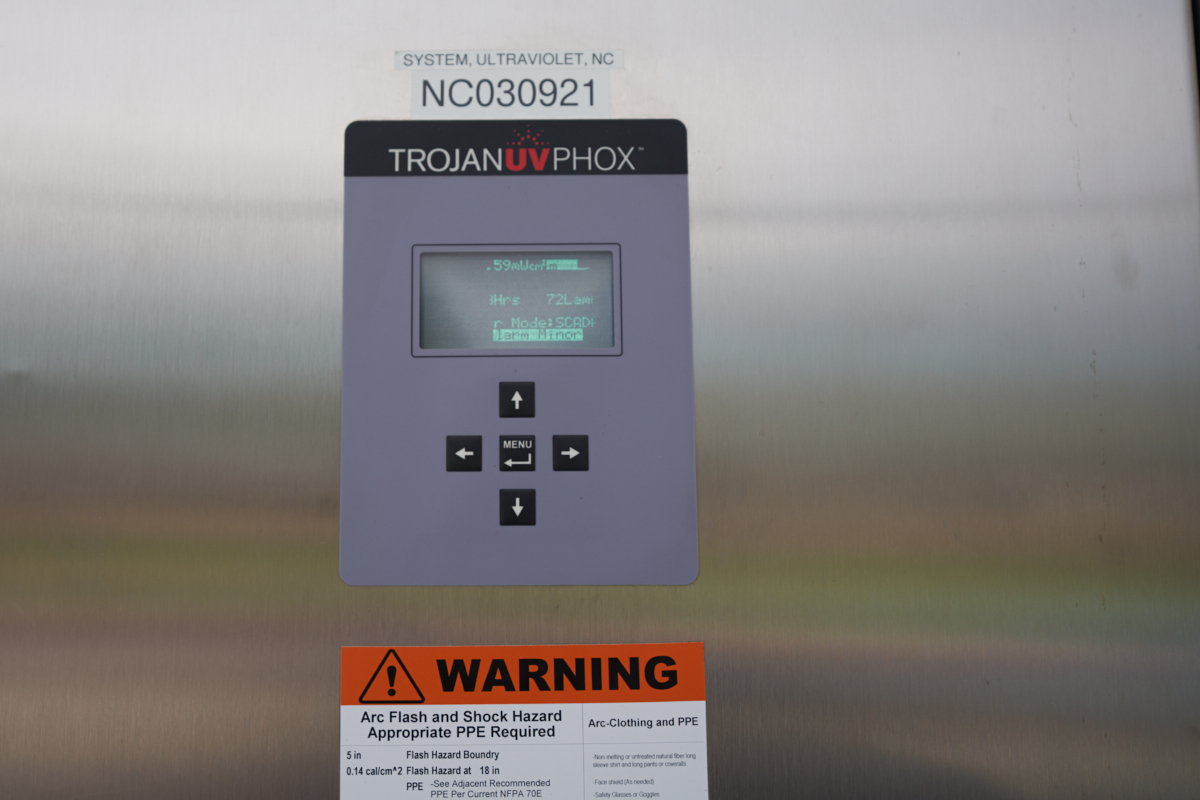
The final step in this process is treatment of the output of the
RO process with high-intensity ultraviolet radiation.
Again, an electrically-intensive process. Note the warning
sticker with flash hazard expressed as calories/cm^2.
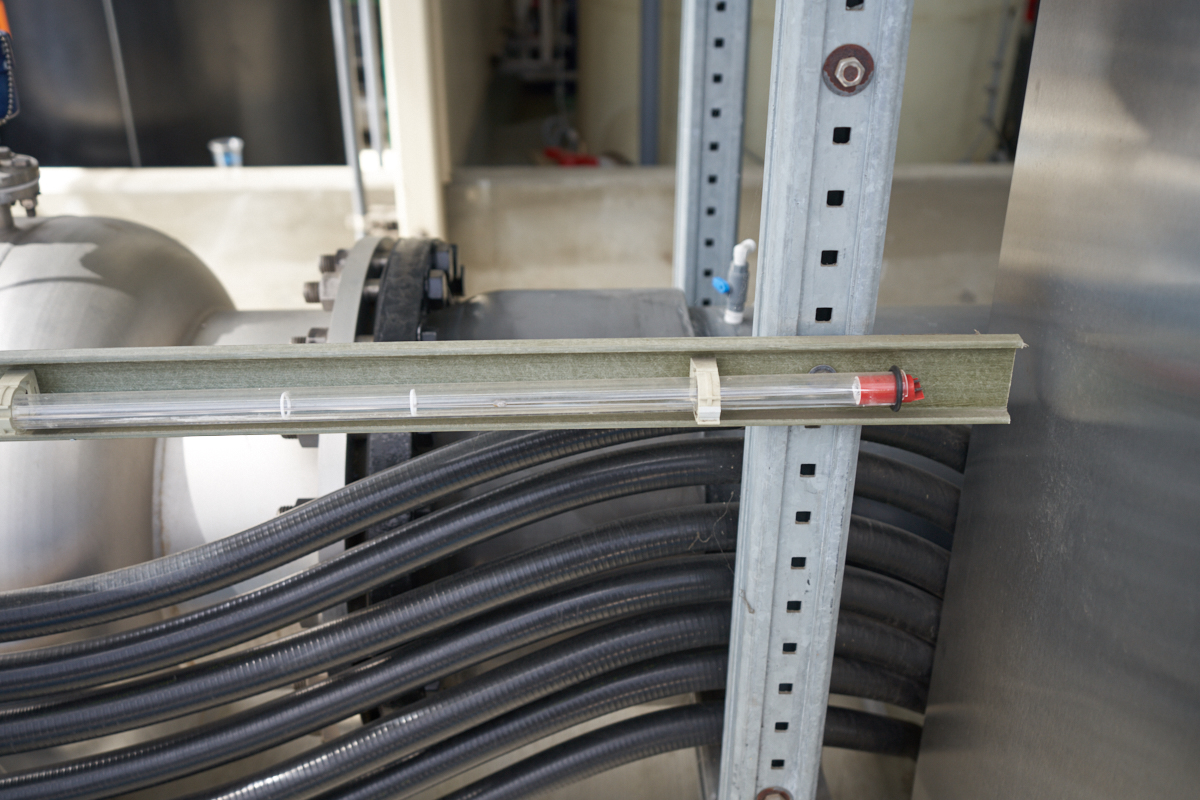
A UV generator tube on display. The innards look very much
like a common fluorescent light bulb, but operated at much
higher energies. The black cables are high-voltage feed
lines for the UV generators. As the last step in the tour we
were given samples of the system output for our own taste
evaluation. The water tasted good, better than SD tap
(which is notorious for high salt levels and bad taste) so to
that end, the system works as advertised.
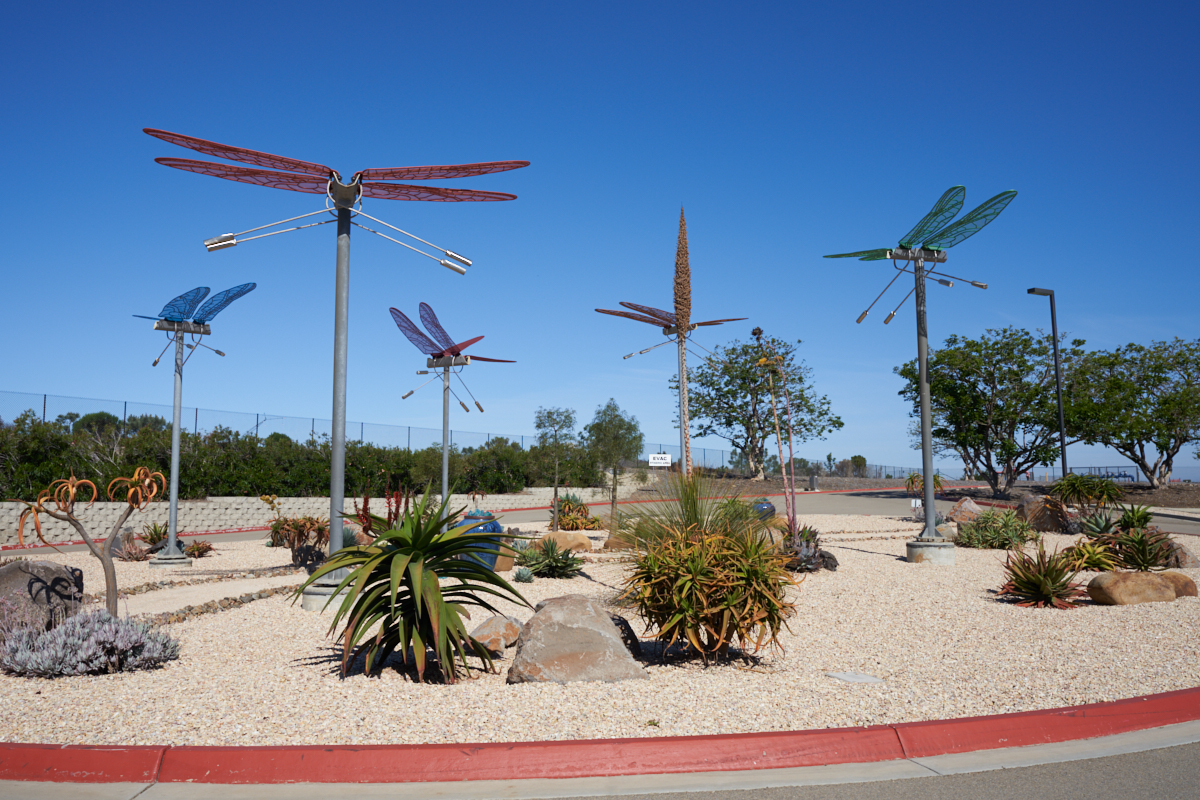
At the completion of the tour we went to the entry area to see
the cactus gardens. There were some interesting kinetic
sculptures of dragonflys that move in the breeze.
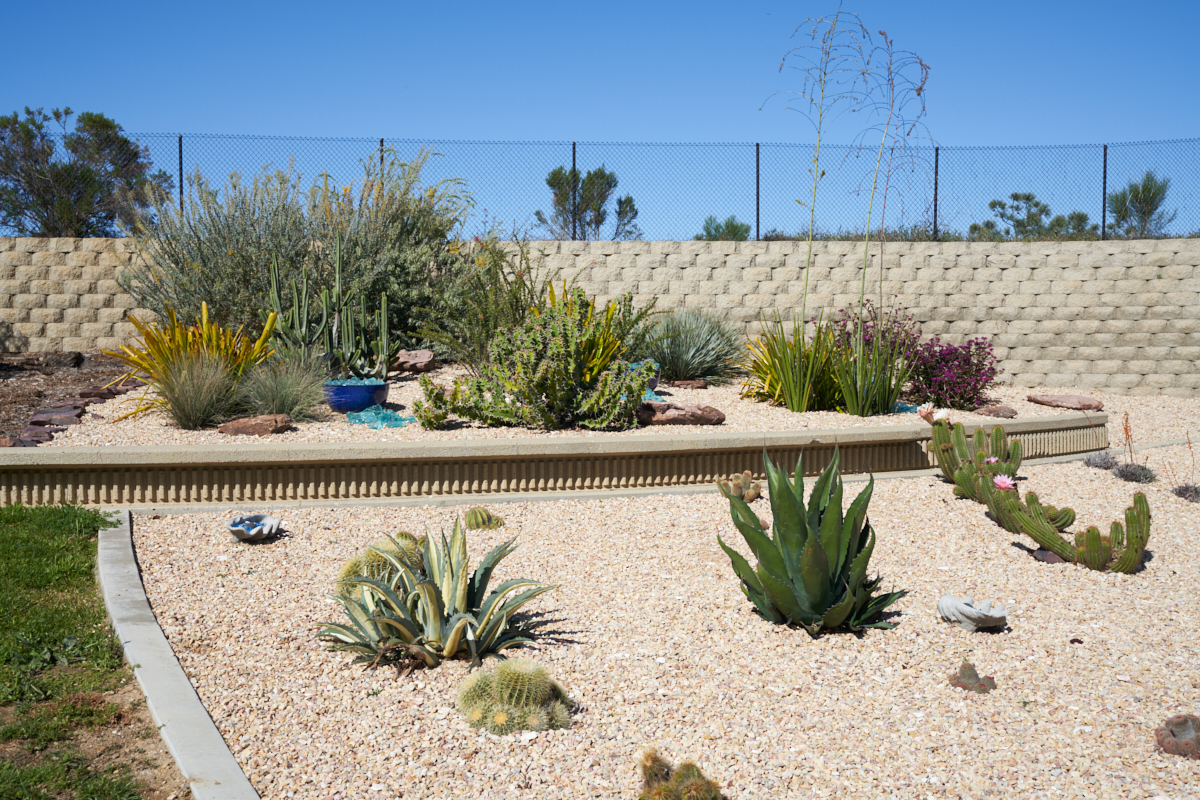
The gardens were in great shape with plenty of crushed gravel.
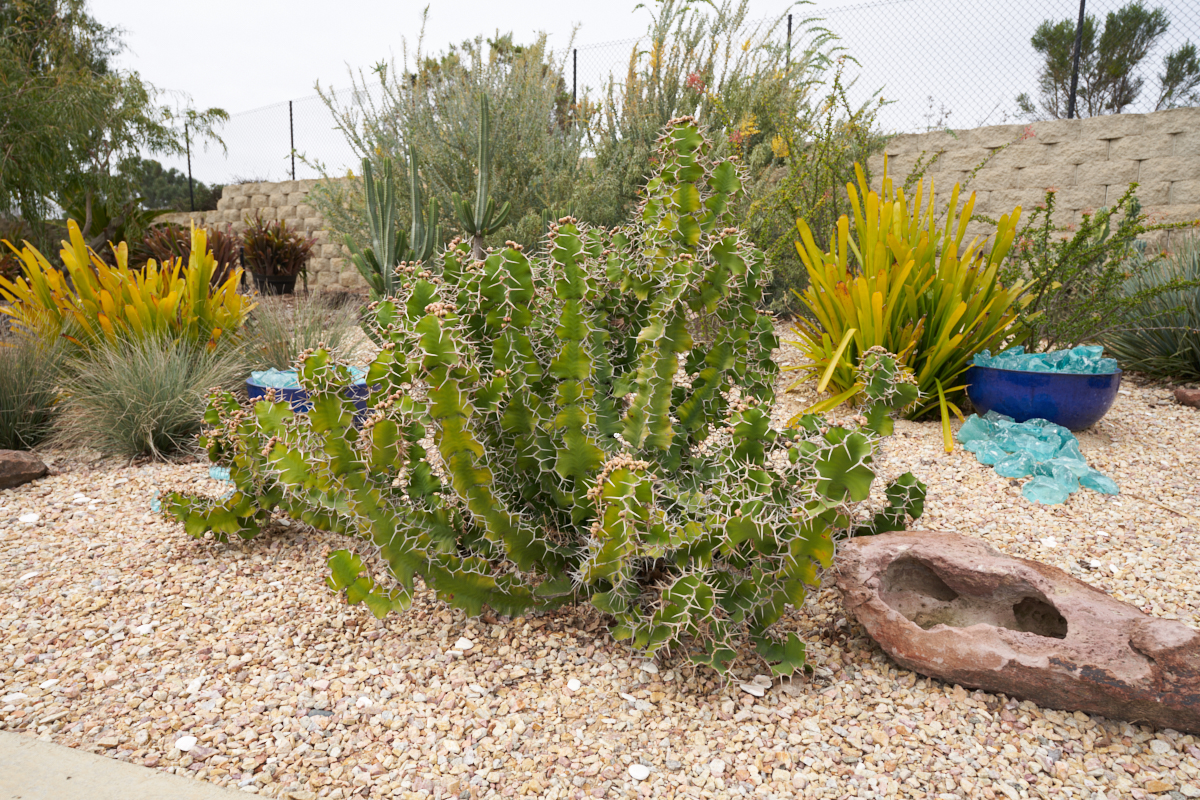
This "cactus" is really a kind of eurphorbia from Africa.
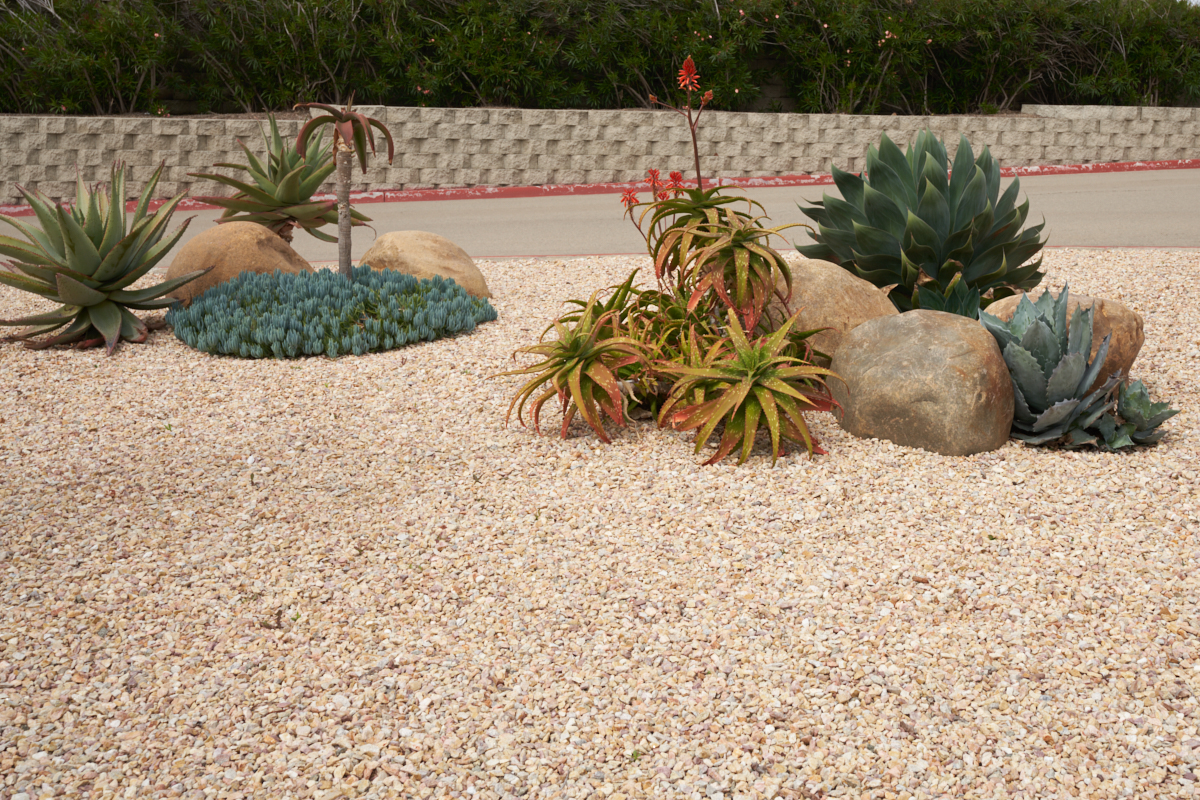
There were lots of non-native plants, many in bloom.

Several of the cactus had huge blooms that were just opening as
we departed. These blooms were on the small-ish side at
about 4" in diameter.

The blossoms were really stunning.

This bloom was about 7" in diameter and had a complex multi-part
structure.

The pale pink colors were very dramatic against the yellow and
greens in the center of the blossom.

The internal portions of this blossom were fully deployed.

This blossom is producing plenty of pollen which has likely been
spread around by foraging insects.

This is a totally different species of cactus that has a sort of
fur hiding the sharp inner needles of the plant.

These cactus defend themselves from animals with a thick coat of
sharp spines.
The SDPWF
tour was interesting. At some level, if you think about it
long enough, the path forward is clear -- all available water
sources must be used. Given the state of technology today,
I had no emotional issue with either the concept or the
implementation. That said, I do have some very significant
concerns about the whole program. My specific issues
revolve around the complexity and energy consumption of the
system. I was told that the power for the SDPWF comes from
reclaimed methane from the Miramar Landfill (which is visible
from my house). And, I was told that a 16 MW gas turbine
produces all the energy needed for the proposed flow of the
system. The current plan is for SDPWF to provide 1/3 of
the total volume of water consumed by 2035. I had specific
questions for the tour guide about "cost per cubic meter" and
"kW per cubic meter" of output water. In the US, the unit
of volume for water is either cubic feet or acre-feet.
None of the personnel I spoke to could address the energy or
cost issues of the water which left me thinking that this is,
perhaps, the dirty little secret of the concept.
As an
engineer, one quickly realizes that most things are achievable
if you are willing to "throw resources at the problem" (think of
the Manhattan Project or our Apollo Program to the moon).
Resources in this case means capital (dollars) or energy.
If it cost a megawatt to produce a liter of water, nobody would
care -- it is way too expensive to be feasible on any wide
scale. No top-line numbers were revealed WRT total capital
costs of the system, but they did show the path of the extensive
pipeline effort to bring sewage uphill from a station near the
SD airport and pump it to Miramar. Pipelines have a large
capital cost and this pipeline runs under the streets near our
home. So, what then will be the "fully amortized cost" of
a liter of water produced by this system? If the cost is
reasonable (when compared to the current cost of imported water)
then SDPWF will hold off the inevitable for a few years.
If, as I suspect, the cost is much, much higher than imported
water, then this will become the highway to hell, supported by
the City and funded on the backs of the taxpayers. Once
the system becomes fully operational and the long-term operating
and maintenance costs are understood, it will be too late for
the city because the homes will have been built and
city-dwellers expect water to come out of the tap when they turn
it on. Stated differently the citizens will be along for
the ride and will not be able to get off at any cost.
The second
area of concern is system reliability, at several levels.
The tour guide was given explicit instructions to emphasize how
clean the reclaimed water is and how it is better/cleaner than
bottled water at the store. I believe these claims ASSUMING
that all links in the processing chain are operating as expected,
if not then the situation could get shitty in a hurry.
But, this is a complex system with many components that are
computer controlled. Remarkably, computers do fail, but
more concerning is the software that drives these systems is
complex and incompletely tested.
I direct
your attention to the thirteenth (13th) photo from the top of
the stainless steel UV control panel. Looking carefully at
that photo you will note several things. First, the
display is failing, not all information is being correctly
displayed; both left and right portions of the display are
missing columns of data. Second, note that there is an
alarm condition. Finally, note that the system is
operating in SCADA mode. SCADA systems have been hacked
years ago, indeed the attack on the Iranian nuclear program was
via SCADA controllers. So, given the dependence of the
system on automated controls and given that SCADA is inherently
insecure and known to have been compromised, should I be
concerned here? How vulnerable is this system to
attack? What provisions have been implemented to prevent
these attacks? Has any testing been performed? Will
the failure of any component of the system disable/nullify the
balance of the system?
As the
British said in 1939 before WWII, "Keep calm and carry
on."
Back to Bill Caid's Home Page
Copyright Bill Caid 2018. All rights
reserved.